Pilgrim 2003–2011: Crystal, Colour and the Wearable Architecture of Y2K
Between 2003 and 2011, Pilgrim developed a crystal-forward, colour-confident design language that now sits firmly within the visual identity of the Y2K revival.
At the time, these pieces were contemporary — optimistic, dimensional and materially bold. Viewed with distance, they read as era-defining.
While early 2000s jewellery often split between delicate minimalism and overt glamour, Pilgrim carved out a distinctive middle ground: wearable structural mass across rings, earrings and pendants.
Substantial without theatrical excess.
Colour-rich without losing proportion.
Confident, but controlled.
This period deserves documentation not as nostalgia — but as design.
⸻
The Context: Y2K and the Return of Visible Form
The early 2000s celebrated:
• Gloss surfaces
• Metallic finishes
• Embellishment
• Volume
Jewellery reflected this shift toward visibility.
Pilgrim’s interpretation of the moment was not about ornament alone. It was about form.
Across formats — rings, drop earrings, pendant clusters — we see:
• Raised compositions
• Layered crystal settings
• Sculptural silhouettes
• Dimensional height
The jewellery occupies space intentionally.
That spatial awareness is central to why these pieces feel current again.
⸻
Crystal as Architecture Across Formats
During 2003–2011, crystal was not decorative accent — it was structural logic.
Multi-stone cluster compositions appear in:
• Elevated ring tops
• Pendant focal centres
• Drop earrings with dimensional depth
Rather than lining stones in flat rows, Pilgrim frequently grouped crystals into raised arrangements that created:
• Height
• Shadow
• Light variation
• Visual density
The compositions feel built.
This architectural use of crystal is precisely what has re-emerged within the Y2K revival. Modern reproductions often replicate sparkle — but lack the structural layering that gave original pieces their dimensional presence.
Pilgrim’s crystal language was constructed, not scattered.
⸻
Colour Optimism and Framing
The 2003–2011 palette reflects the era’s optimism:
• Denim blues
• Olive greens
• Rose pinks
• Multicolour combinations
• Peach and lilac enamel
Importantly, colour is framed.
Whether in a cluster ring, a pendant medallion or an earring drop, colour is usually anchored by:
• Silver-tone structural bases
• Gold-tone defined edges
• Clear compositional boundaries
This framing prevents visual chaos. It keeps bold colour wearable.
In contemporary styling — often neutral, monochrome, tailored — these pieces function as focal accents without overwhelming the outfit.
⸻
Enamel and Surface Control
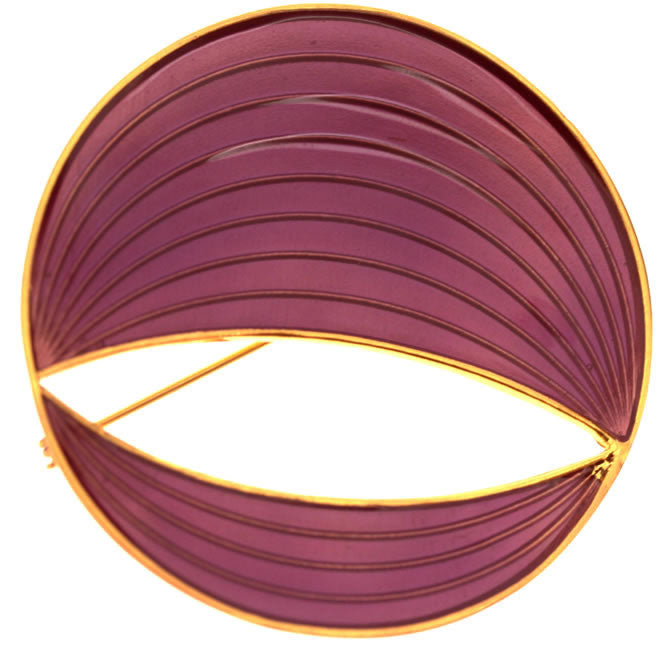
Enamel appears across rings, earrings and brooch-style motifs during this period.
The floral forms in particular demonstrate:
• Defined petal spans
• Gloss surface finish
• Structural curvature
• Clean outline control
These are scaled, dimensional florals — not delicate miniatures.
In earrings, enamel petals create movement.
In rings, they create visual anchor.
In pendants, they frame crystal centres.
Surface contrast between gloss enamel and faceted crystal produces layered light interaction — another defining trait of the era.
⸻
Structural Mass and Wearability
One of the most distinctive aspects of Pilgrim’s Y2K output is its comfort with mass.
Pieces carry visual weight:
• Broad ring tops
• Layered pendants
• Drop earrings with dimensional build
Yet they rarely feel excessive.
Why?
Because volume is balanced through:
• Rounded edges
• Open spacing within cluster arrangements
• Symmetry or controlled asymmetry
• Proportion relative to the body
The result is wearable architecture.
Jewellery that has presence — but does not dominate the wearer.
This proportional discipline is a hallmark of Scandinavian design thinking, even within a visually bold era.
⸻
Practicality Supporting Design
During this period, adjustable mechanisms in rings and lightweight structural engineering in earrings allowed Pilgrim to experiment with scale while maintaining comfort.
This integration of practicality and design ambition is significant.
It enabled:
• Larger cluster surfaces
• Raised forms
• Bolder silhouettes
Without sacrificing wearability.
The pieces were designed to be worn regularly — not reserved as costume.
⸻
Scandinavian Discipline Within a Bold Era
Compared with more ornate European crystal brands of the same period, Pilgrim’s compositions demonstrate compositional restraint.
Across formats, we see:
• Clear focal points
• Defined geometric boundaries
• Controlled use of asymmetry
• Structured rather than chaotic layering
Even at its most exuberant, the design language remains organised.
That clarity of form is why these pieces integrate easily into modern wardrobes.
They pair naturally with:
• Tailoring
• Knitwear
• Monochrome dressing
• Clean silhouettes
They function as accent rather than excess.
⸻
Central to the Wearable Side of Y2K
As Y2K aesthetics re-emerge, much attention focuses on clothing silhouettes and metallic references.
Yet jewellery is one of the clearest visual markers of the era.
Pilgrim’s 2003–2011 output represents the wearable interpretation of that design moment.
Not runway exaggeration.
Not minimalist retreat.
But crystal-forward, colour-framed, structurally confident jewellery across multiple formats.
These pieces sit at the centre of the revival because they capture the era’s energy without being dependent on it.
They were built with form in mind.
⸻
Collecting the Period
With substantial stock depth, it becomes possible to see recurring structural logic:
• Repeated cluster architectures
• Consistent enamel scaling
• Proportional control across formats
• Crystal density balanced by space
Viewed collectively, the pieces form a coherent design chapter.
Not isolated fashion items — but a documented design language.
⸻
Enduring Relevance
The relevance of 2003–2011 Pilgrim jewellery lies not in nostalgia — but in structural integrity.
Well-proportioned crystal clusters.
Defined colour framing.
Dimensional surfaces.
Wearable mass.
Between 2003 and 2011, Pilgrim articulated a crystal-driven structural language that now sits at the heart of the Y2K revival.
This was not peripheral design.
It was foundational to the wearable side of the era.